
Bergmann-Junk Test
Quantitative determination of the thermal stability of nitrocellulose and propellants at 120 °C or 132 °C according to STANAG 4178 5C.
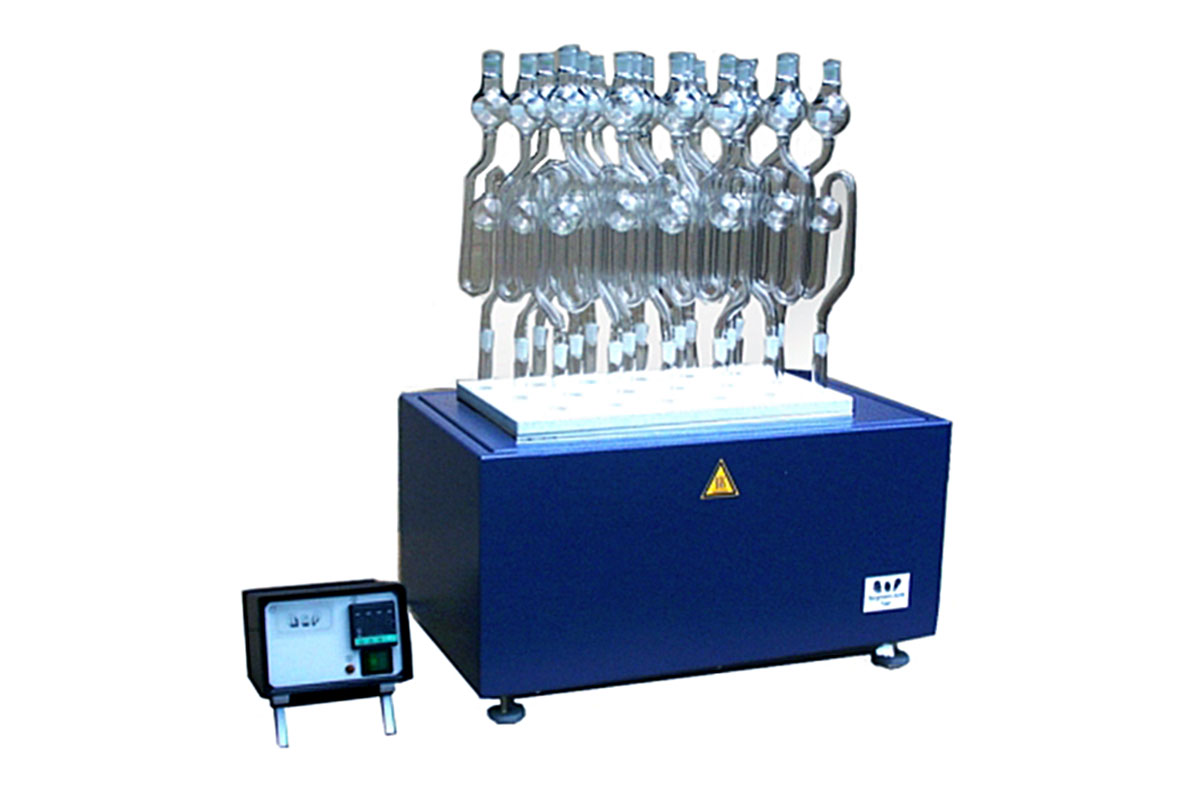
Description
Device for determining the thermal stability of nitrocellulose and other nitro compounds, as well as single- and double-base propellants according to the Bergmann-Junk test at 120 or 132 °C (STANAG 4178 5C).
The Bergmann-Junk test is based on the quantitative determination of the nitrogen oxides produced during the thermal decomposition of the sample.
Scope of delivery
- Heavy aluminum heating block (18 bores Ø 19.75 ±0.2 mm, depth 200 ±0.2 mm), ISO insulation plate, PT100 sensor, over-temperature protection (150 °C)
- Programmable PID controller in a separate control box (control accuracy ±0.1 °C, RT to 135 °C)
- 18 test tubes with ball-head configuration (Ø 19.0 ± 0.5 mm × 270 ± 2 mm)
- Special rack for handling the test tubes
- Daylight lamp for detection of nitrous fumes
Related products
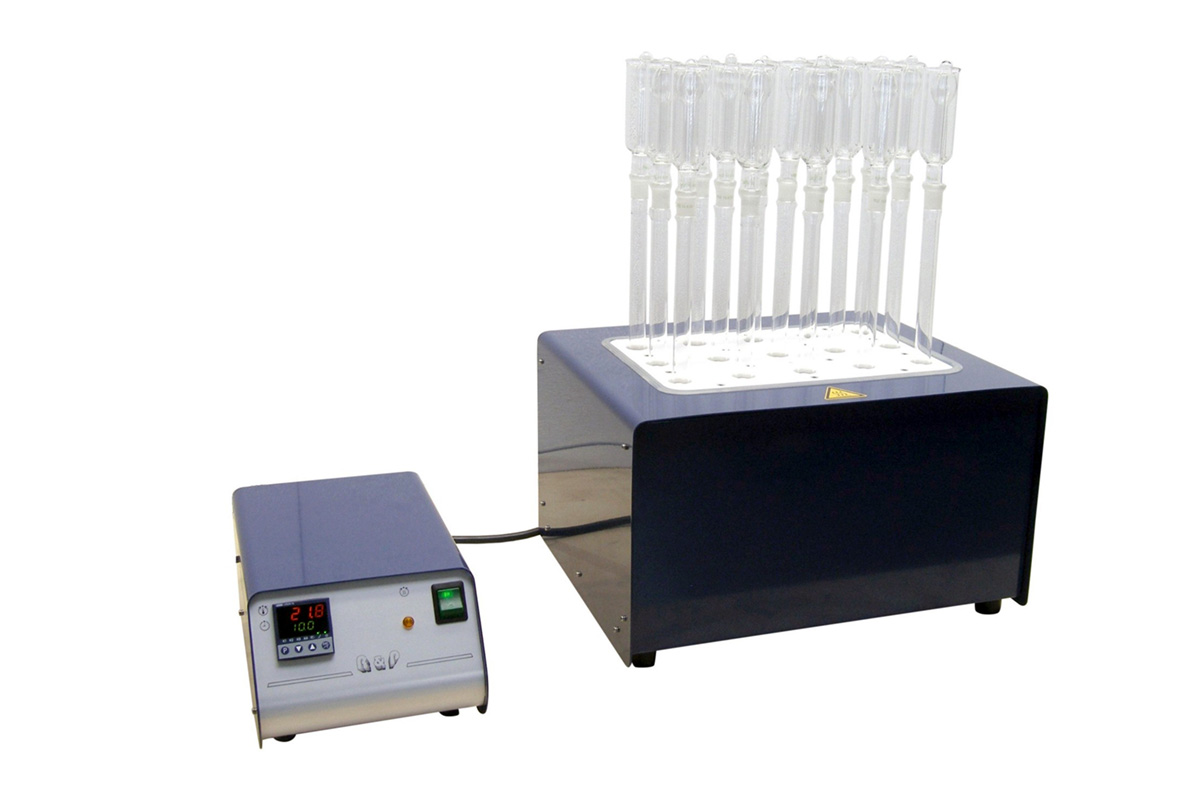
Bergmann-STANAG Test
Thermal stability testing of nitrocellulose and propellants according to the Bergmann-Junk test at 132 °C in compliance with STANAG 4178 5A/B.
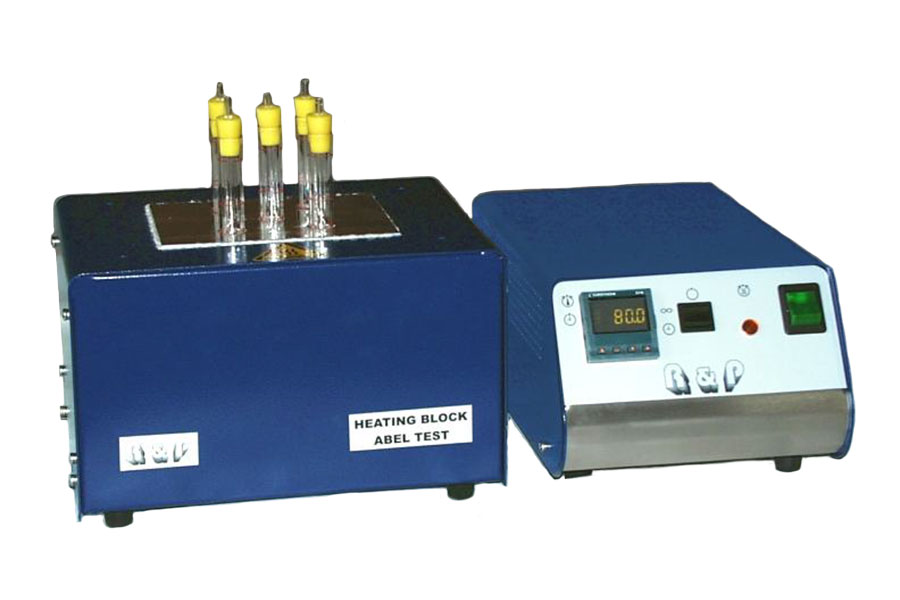
Abel-Test (Flash Point Tester)
Thermal stability testing of nitrocellulose powders and nitro-containing explosives according to the Abel test at 80 °C.
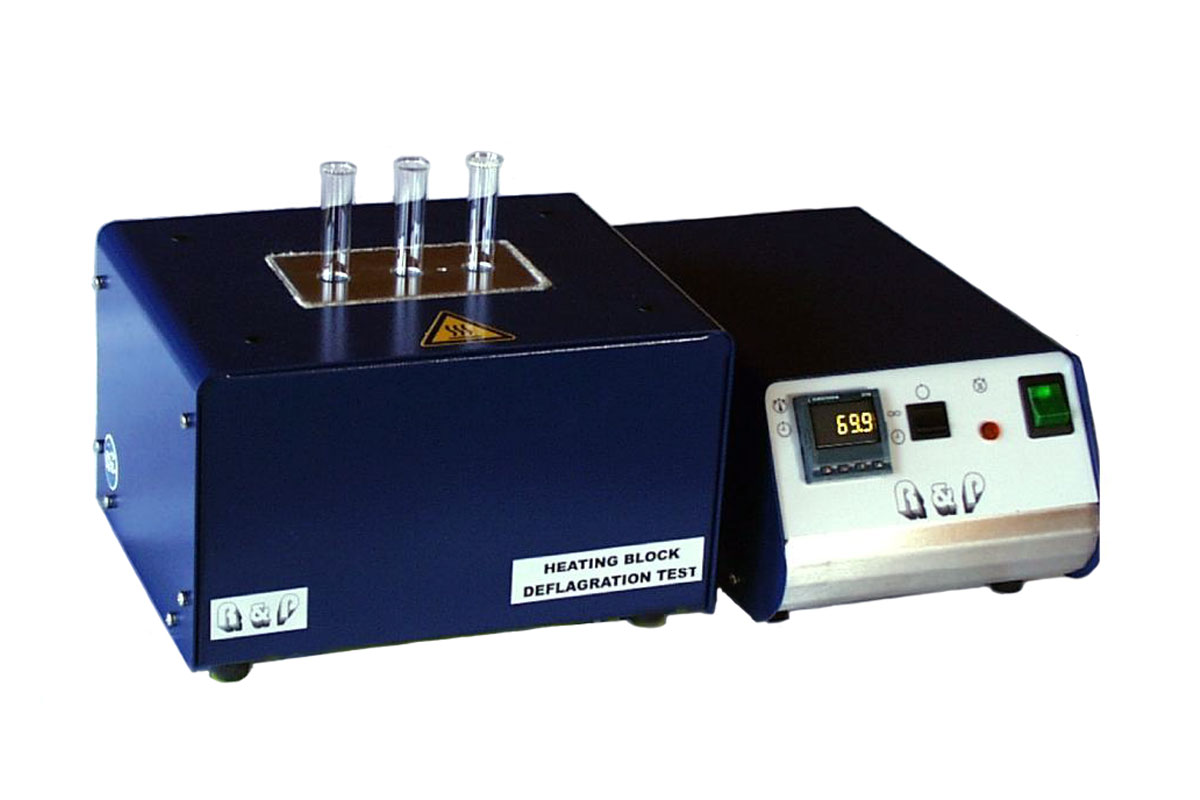
Deflagrations-Tester DT400 (Deflagration Tester DT400)
Determination of the deflagration temperature of powders and explosives — available as DT400, DT400-6 and DT500-6.
Need advice for your test lab?
Get a no-obligation consultation — we will find the right instrument for your requirements.